
Wholesale Artificial Wedding Flowers: Why “Silk” Isn’t a Spec
Ask ten suppliers what their artificial flowers are made of and most will say “silk.” Almost none of them mean actual silk. It’s shorthand for a category that spans cheap polyester that fades under venue lighting within a season, to real-touch latex and PU blends that hold color and texture through years of repeat use. For a wholesale buyer, that gap is the entire sourcing decision — and it’s invisible in a listing photo.
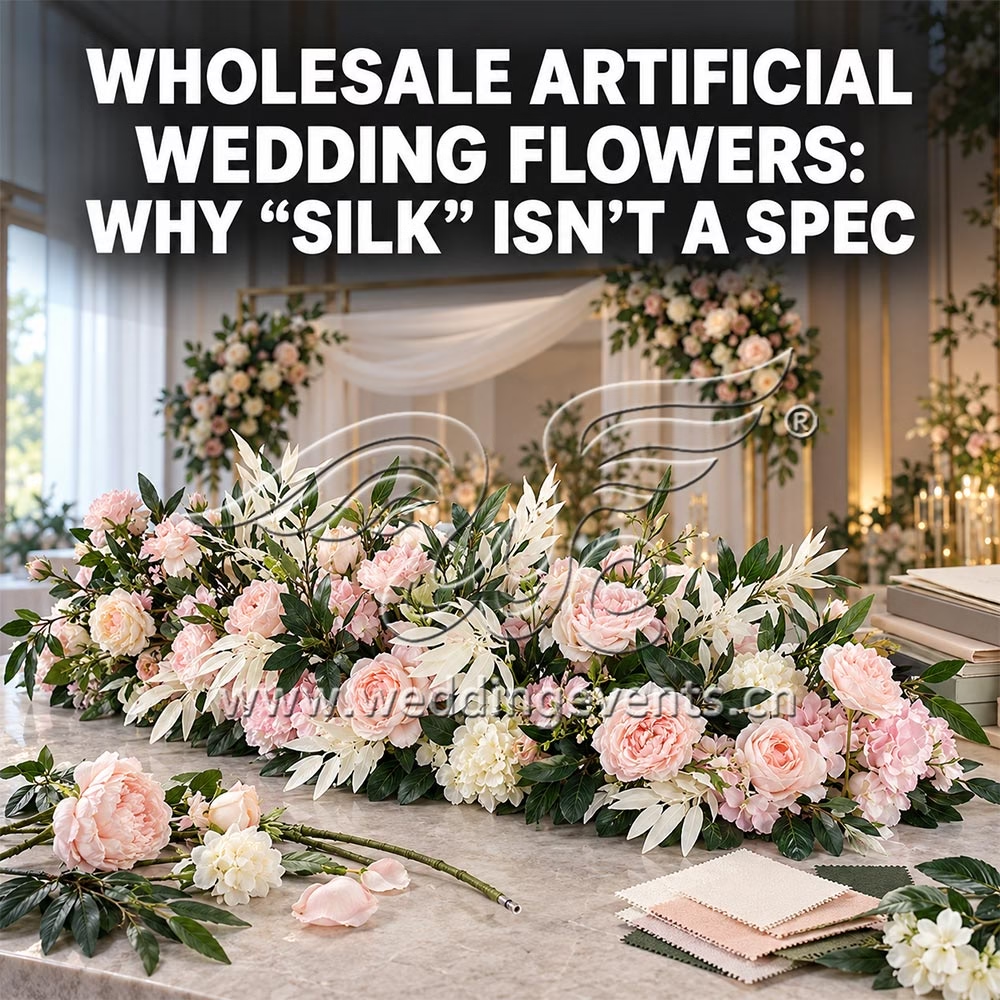
Why this category rewards careful sourcing
Artificial flowers get reused more than almost anything else in an event inventory. A chair gets rented, cleaned, and rented again. A flower arrangement, if it’s built from decent material, gets reused dozens of times across different events before it needs replacing. If it’s built from cheap material, it gets reused once or twice before the petals start looking flat and the color shifts under stage lighting — and then it’s dead inventory. The material grade a buyer chooses up front determines how many event cycles a single purchase actually survives.
What to check before ordering wholesale
Material type. “Real touch” latex or PU-coated petals hold shape and resist crushing far better than basic polyester fabric flowers. Polyester is cheaper per unit and fine for one-time décor like aisle petals, but it’s the wrong choice for a centerpiece arrangement meant to be reused across multiple bookings.
Colorfastness under event lighting. Cheap dye jobs shift color under warm venue lighting or fade after repeated exposure to direct sun at outdoor ceremonies. Ask a supplier directly about colorfastness testing or request a sample held under strong light for a few days before committing to a bulk order — this is the single easiest defect to miss when judging from a photo alone.
Stem and wire quality. Flowers that get arranged and rearranged across multiple events need stems that bend without snapping and hold a shape once bent. Thin, brittle wire stems are a common corner-cutting point in lower-cost production runs and show up as breakage complaints after a buyer’s second or third use cycle, not the first.
Flame-retardant certification. Many venues, particularly hotels and indoor banquet spaces, require flame-retardant certification for decorative floral elements. Confirm this is available and documented before placing a bulk order intended for resale to venues or planners who will need to show compliance paperwork.
A sourcing distinction worth asking about
Some artificial flower lines are built and priced for single-use décor — aisle scatter, disposable centerpiece fillers, inexpensive bulk greenery. Others are built for repeat styling inventory — the kind a planner reuses across a full season of bookings. Ask a supplier which category their flowers are actually positioned for rather than assuming price tier alone tells the story; a buyer stocking for repeat rental use needs the latter even at a higher per-unit cost, since the real cost comparison is per-use, not per-unit.
Questions worth asking before a bulk order
- Is the petal material polyester, latex, or PU real-touch, and what’s the price difference between grades?
- Has the color been tested for fade resistance under UV or warm stage lighting?
- Is flame-retardant certification available and documented?
- What’s the MOQ per color, and can a trial order mix colors within that minimum?
Sourcing artificial flowers for your next order? Browse the Artificial Flower collection at Wedding Events, or reach out for material samples and wholesale pricing by grade.
If you want to know more about outdoor weddings, please click on this: Wholesale Wedding Sofas | Wedding Events Manufacturer